Thank you for your feedback.
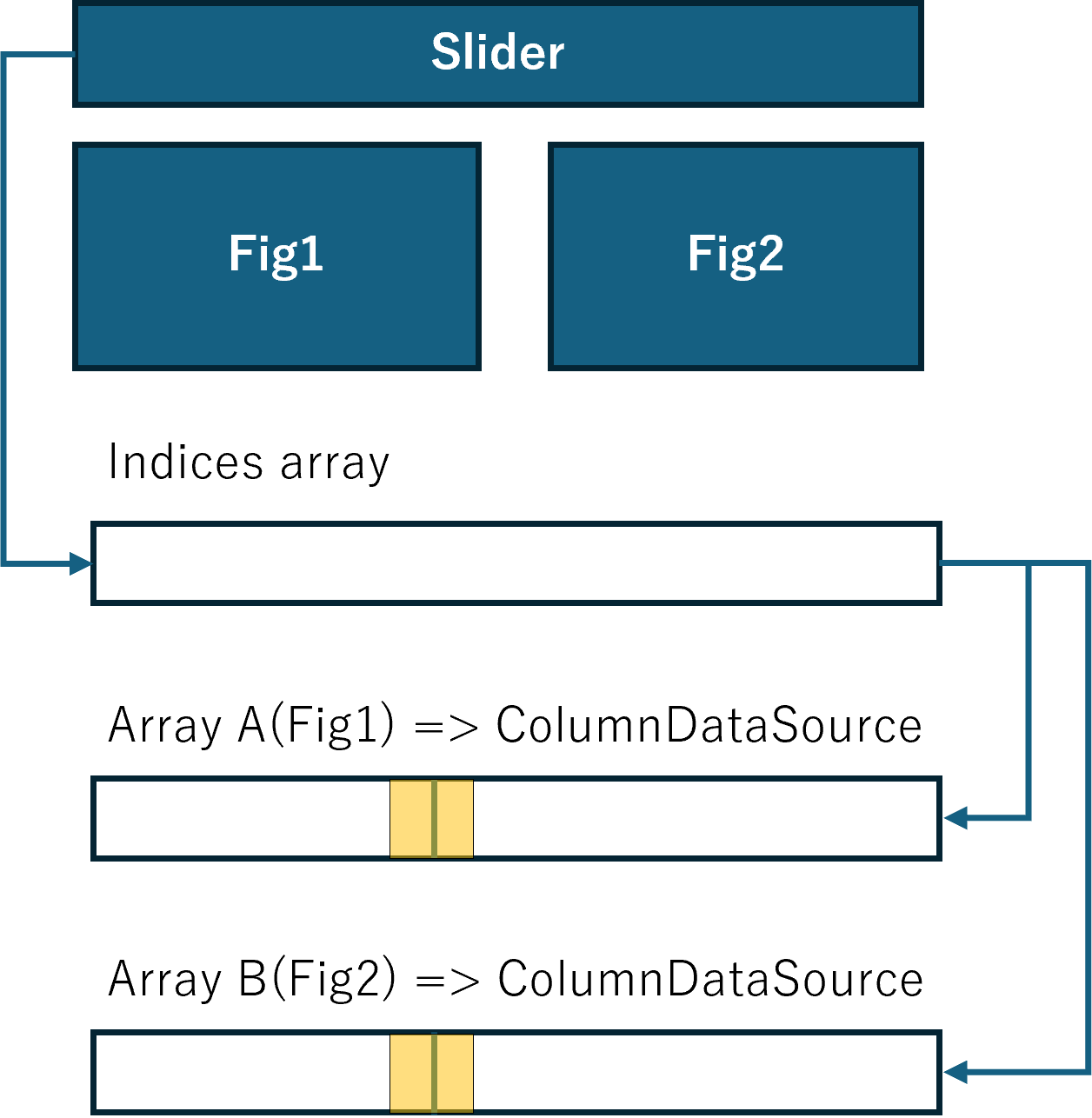
Using the third solution might achieve something similar, and I also think it might require programming in Python itself rather than using the API within Bokeh. Firstly, the plot I am trying to execute is simplified as follows: Figure1 and Figure2 display the range of arrays as time series data.
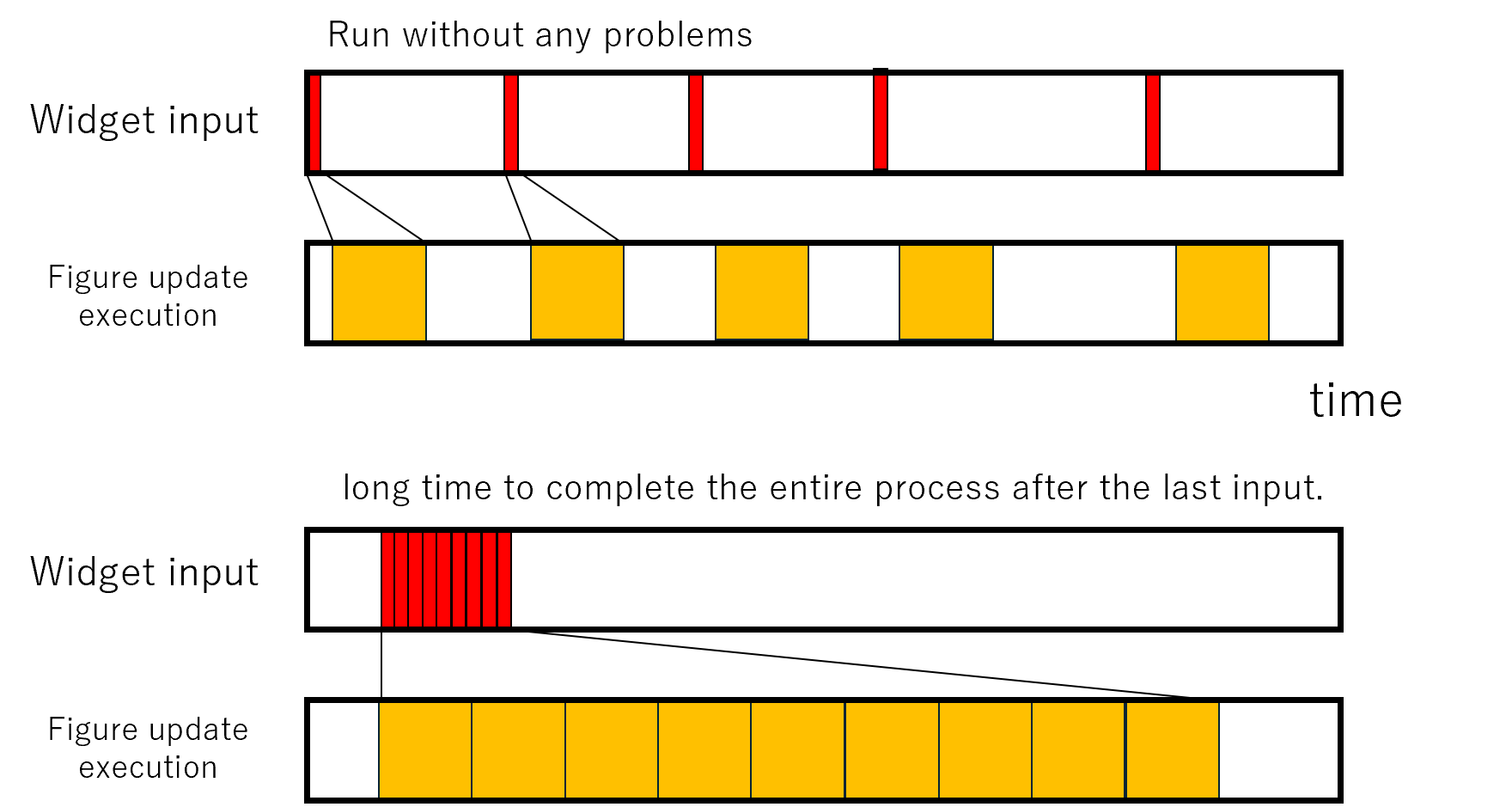
Currently, since I am trying to move several elements simultaneously, updating the figures takes time. If multiple inputs are made into the widget, the update process continues for a while.
Of course, optimizing the drawing process for efficiency is an important approach. However, since it is possible to input more data than can be processed in real-time, the phenomenon described above occurs, making it inconvenient to use.
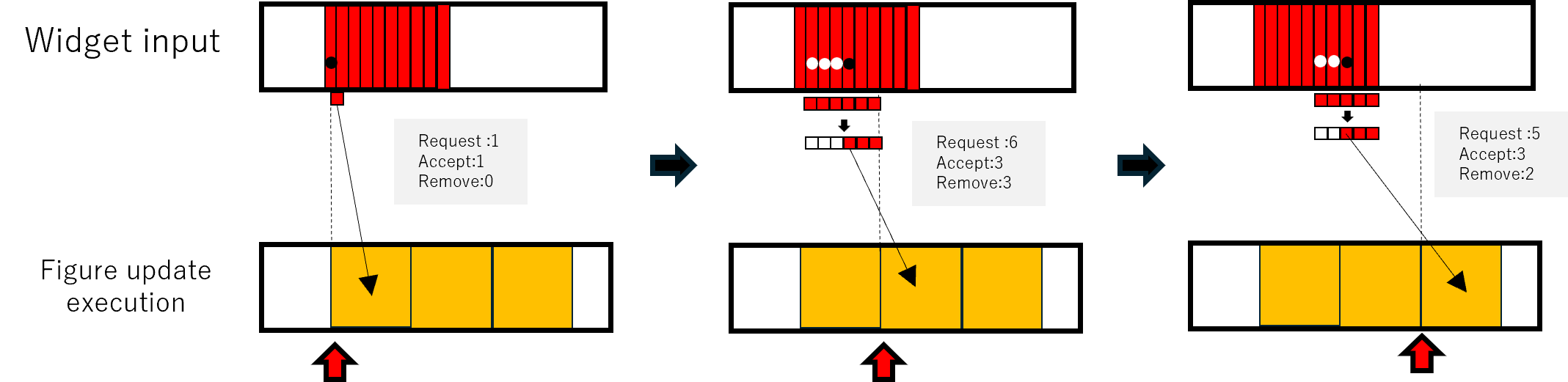
Therefore, to eliminate this, if I can know how many inputs have been received when starting a new drawing as shown in the diagram below, we can discard inputs older than a certain threshold (e.g., three) and process the first of the most recent three inputs.
By repeating this, I think I can avoid the phenomenon where the drawing update continues for a while after the operation is finished.
This is just an idea of whether such a thing is possible. My thought is that any method that can solve or mitigate the phenomenon described above is acceptable.
Thank you.